
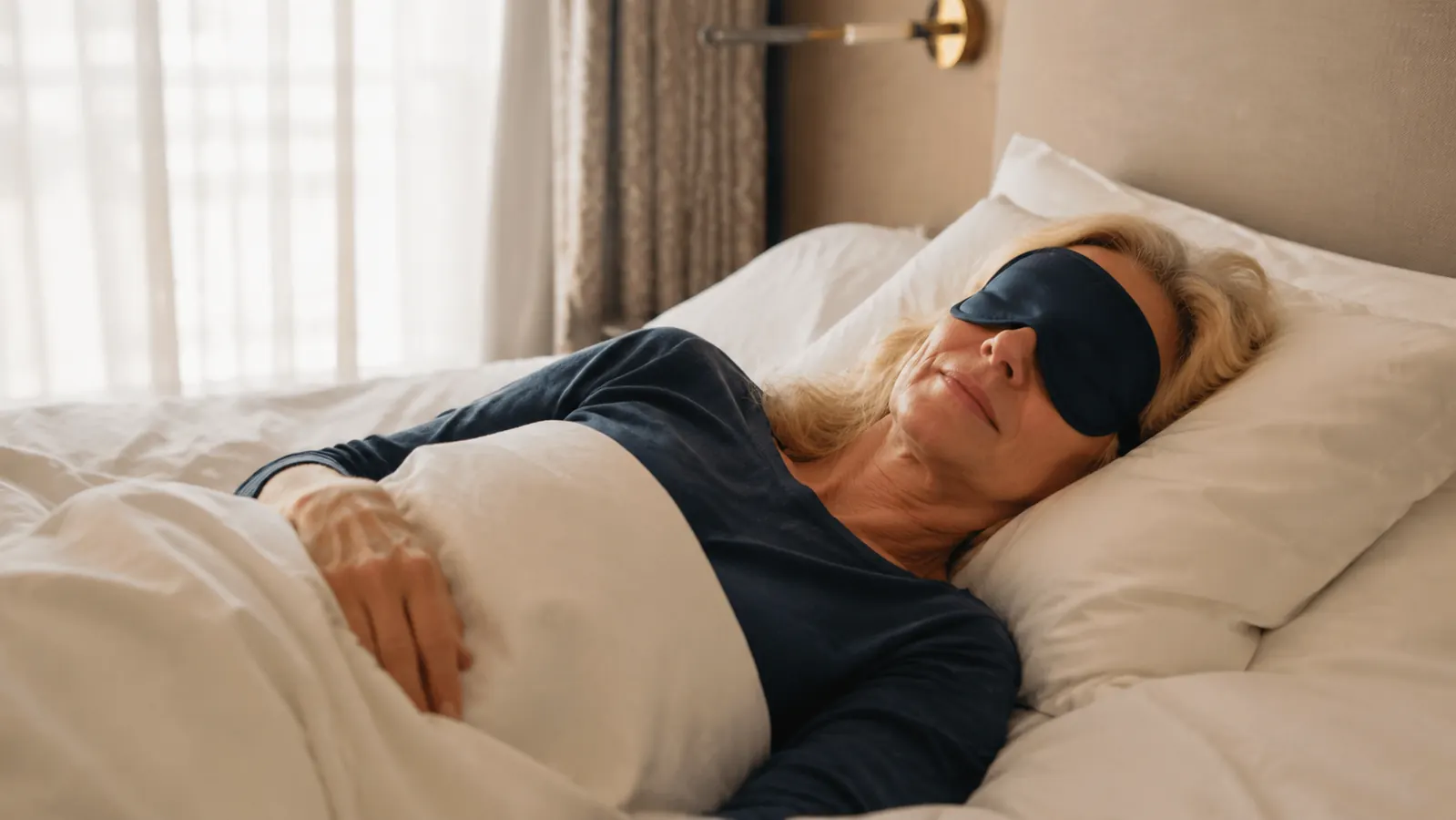
Light was stealing my sleep for years before I figured out why. I am not a night owl. I am in bed by 10 p.m. most nights. But I live in the Pacific Northwest, where June mornings turn the sky pale at 4:45 a.m., and my bedroom blinds have never blocked that gray creep. Add one hotel trip, one overnight flight, or one night at my daughter's house where the streetlight hits the guest room window just right, and I was done. I would lie there half-awake, unable to drop back under, watching the ceiling get brighter by the minute.
What I did not understand until a sleep specialist explained it to me is that your brain does not need bright light to stay alert. Dim light is enough. Even the ambient glow from a streetlamp filtered through curtains is enough for your pineal gland to slow melatonin production and pull you toward wakefulness. The fix is not thicker curtains or blackout shades you have to install in every room you ever sleep in. The fix is a good blackout sleep mask you wear every night, in every room, on every flight. This guide walks through exactly how to use one correctly, because most people get it slightly wrong and then decide masks do not work for them.
If light is waking you up, this is the $9 fix that works in any room, any hotel, any time zone.
The Mavogel Cotton Sleep Mask is the most-reviewed blackout sleep mask on Amazon, with over 94,000 ratings averaging 4.5 stars. The adjustable nose bridge is what sets it apart from flat masks that let light in at the bottom.
Amazon Check Today's Price on Amazon →Step 1: Choose a Mask With a Contoured Nose Bridge
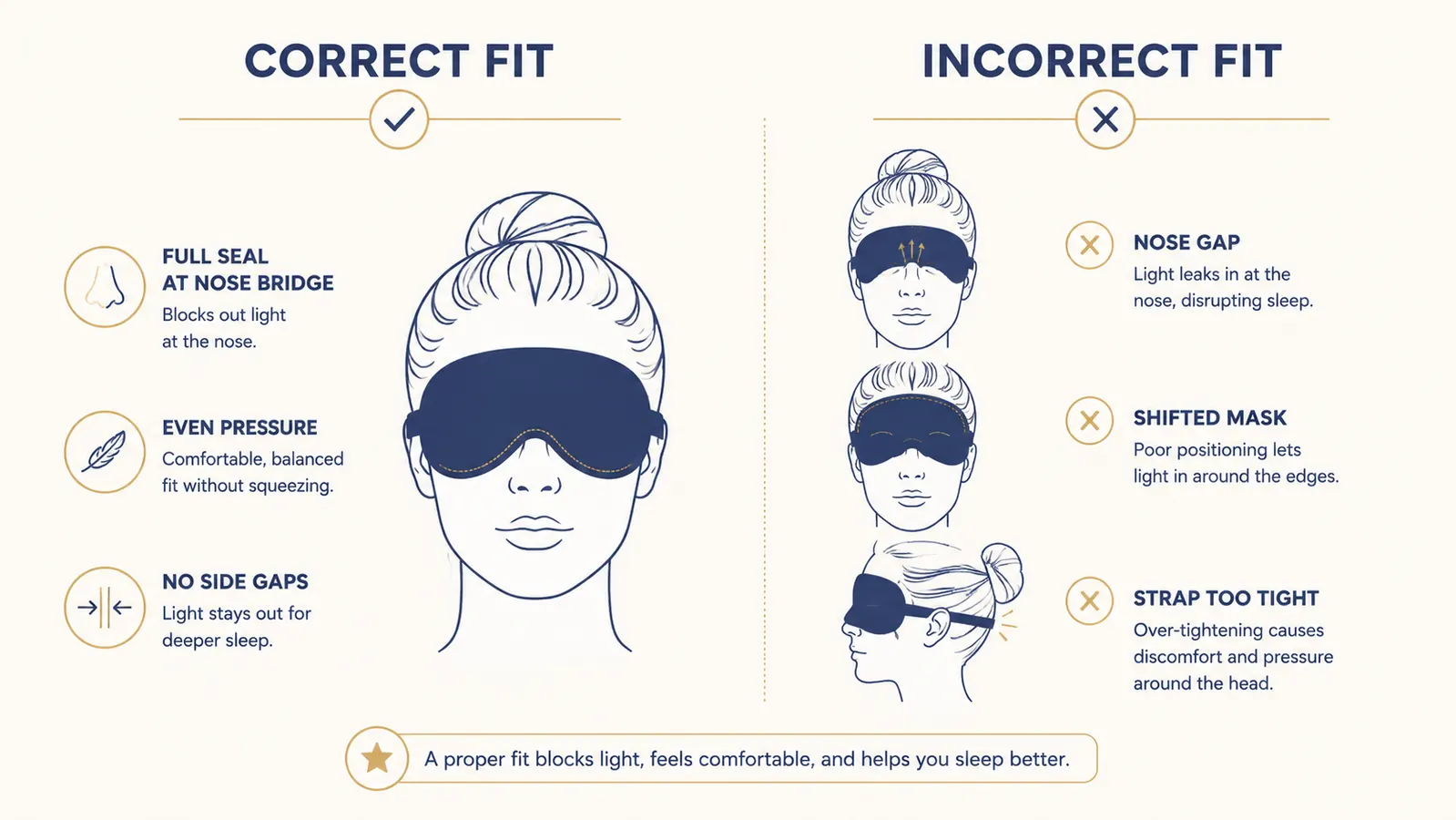
The single biggest mistake people make with sleep masks is buying a flat mask. Flat masks press directly against your eyelids, which is uncomfortable for most people and also leaves a crescent-shaped gap right at the nose bridge where ambient light leaks in. That gap is why so many people say masks did not help them. The light still got through.
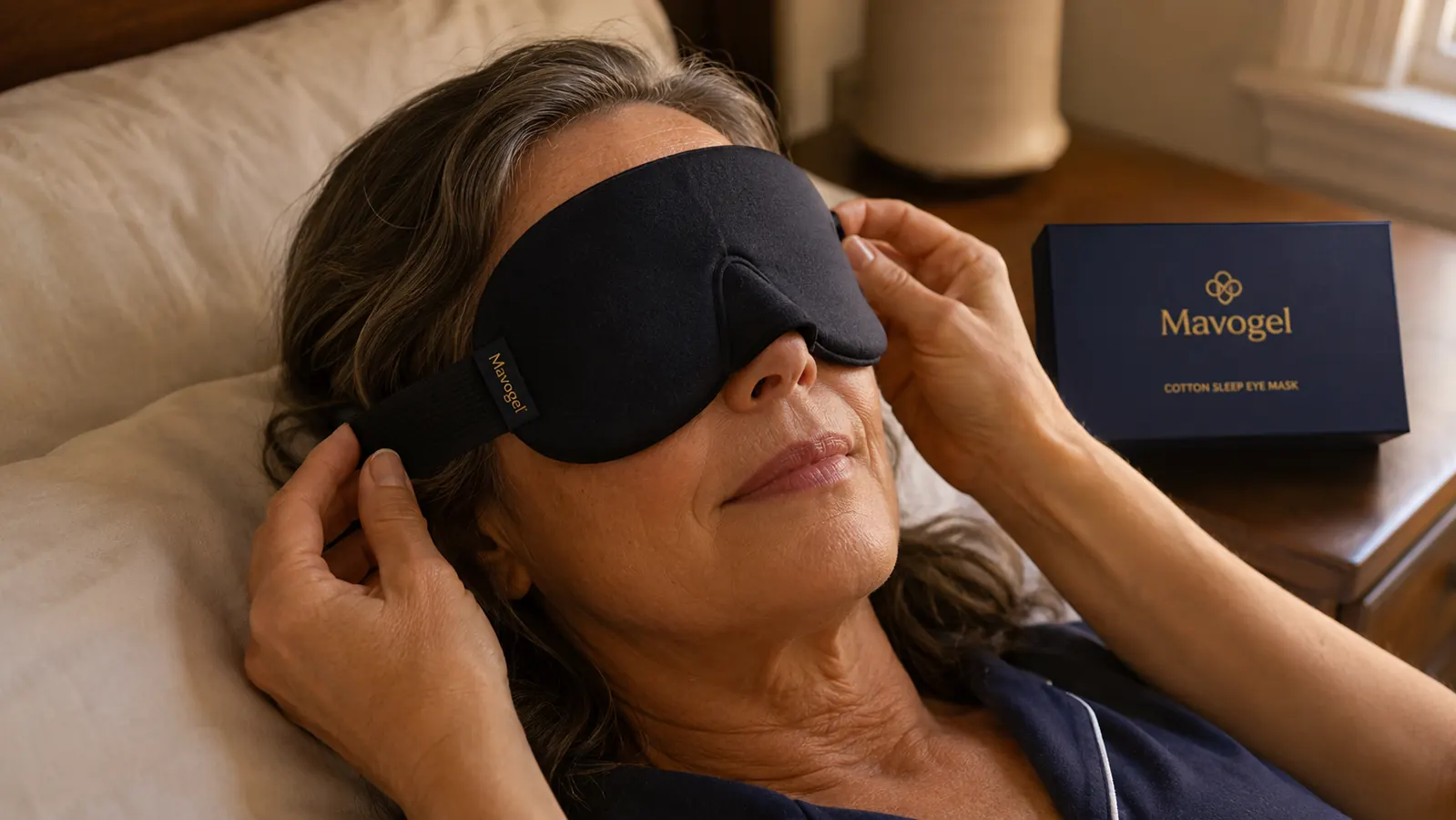
A contoured mask or one with a flexible nose piece solves both problems at once. The Mavogel Cotton Sleep Mask, for example, uses a wire-reinforced nose bridge that you bend to fit your face. It creates a seal at the inner corners of your eyes without touching your eyelids directly. I can blink freely, open my eyes under the mask if I need to check something, and the cotton sits against my cheeks and forehead rather than against my eyeballs. That is the design you want. Before you even try to sleep in a mask, make sure the nose piece is shaped correctly for your face. Press the wire gently inward until there is no light gap when you slide a finger along the bridge. It takes about ten seconds and makes a real difference.
If you are buying a mask for the first time, skip anything marketed as a simple elastic-band flat mask, even if the reviews look good. The contoured or nose-bridge-adjustable styles consistently outperform them for people who sleep in rooms with any ambient light.
Step 2: Adjust the Strap Before You Get Into Bed
Adjusting the strap in the dark while you are already groggy is a recipe for getting it wrong. Do it while you are still awake and can see what you are doing. The strap on the Mavogel mask uses a simple slide adjuster. You want it snug enough that the mask stays put when you roll over, but loose enough that you do not feel pressure against your skull or get a headache by 3 a.m.
A practical test: put the mask on, set it to your preferred tightness, and then shake your head side to side. If the mask shifts more than a half-inch, tighten the strap slightly. If you can feel the strap digging into the back of your head when you press your head into the pillow, loosen it one notch. For side sleepers, the strap should sit across the widest part of the back of your head, not down near your neck. If it slips low, the whole mask migrates down during the night and the nose seal breaks.
Step 3: Seal the Nose Bridge Correctly for Your Face Shape
This step trips up a lot of people, especially those with a lower nose bridge, narrow faces, or high cheekbones. The wire in the Mavogel mask is the same wire you find in a good N95 respirator, and you work it the same way: pinch it gently from the center outward, curving it to follow the contour of your nose and inner eye corners. Do not bend it sharply. You want a gradual curve, not a crease.
After shaping the bridge, put the mask on and press the bridge gently against your face with two fingers. Look for any light creeping in around the nose or inner corner of your eye. If you see a sliver of light, bend the wire a touch tighter at the center. If the wire is pressing uncomfortably against the side of your nose, ease it out slightly. Most people find their ideal shape in two or three tries and then leave the mask bent exactly that way from then on.
The nose bridge gap is why most people give up on sleep masks. Close that gap and the mask does everything it promises.
Step 4: Give Your Eyes Two or Three Nights to Adjust
I want to be straightforward about this: the first night I wore a sleep mask I woke up at 2 a.m. and pulled it off without thinking about it. I had been wearing it in my sleep for about four hours, and when I briefly surfaced, the unfamiliar sensation was enough to make me yank it away. The second night I made it through to about 4:30. By night three I slept straight through to my alarm and barely noticed I had it on.
This is completely normal. Your brain has a brief adjustment period when any new sensation is present during sleep. The key is to not give up after night one or two. Most people who say masks did not work for them tried for one night and quit. If you can push through to night four or five, the mask stops registering as a foreign object and just becomes part of your sleep setup. Some people speed up the adjustment by wearing the mask for a nap first, in a familiar, comfortable setting, before relying on it for overnight use.
Step 5: Use It in the Trickiest Light Environments
Once you have the fit dialed in and your brain has stopped fighting the mask, you can use it anywhere. Hotel rooms are the obvious use case. I travel about six times a year now, mostly to visit grandchildren, and I never check into a room and worry about the blackout curtains anymore. I put on the mask, the room could have a neon sign outside the window for all I care, and I sleep.
Early summer mornings at home are the other situation that used to get me. My bedroom faces east and by mid-June the sun is up before 5 a.m. I was consistently waking about an hour before I needed to and lying there unable to go back under. The mask cut that entirely. I sleep until my alarm now, even in June, even with east-facing windows and blinds that were never designed for total blackout.
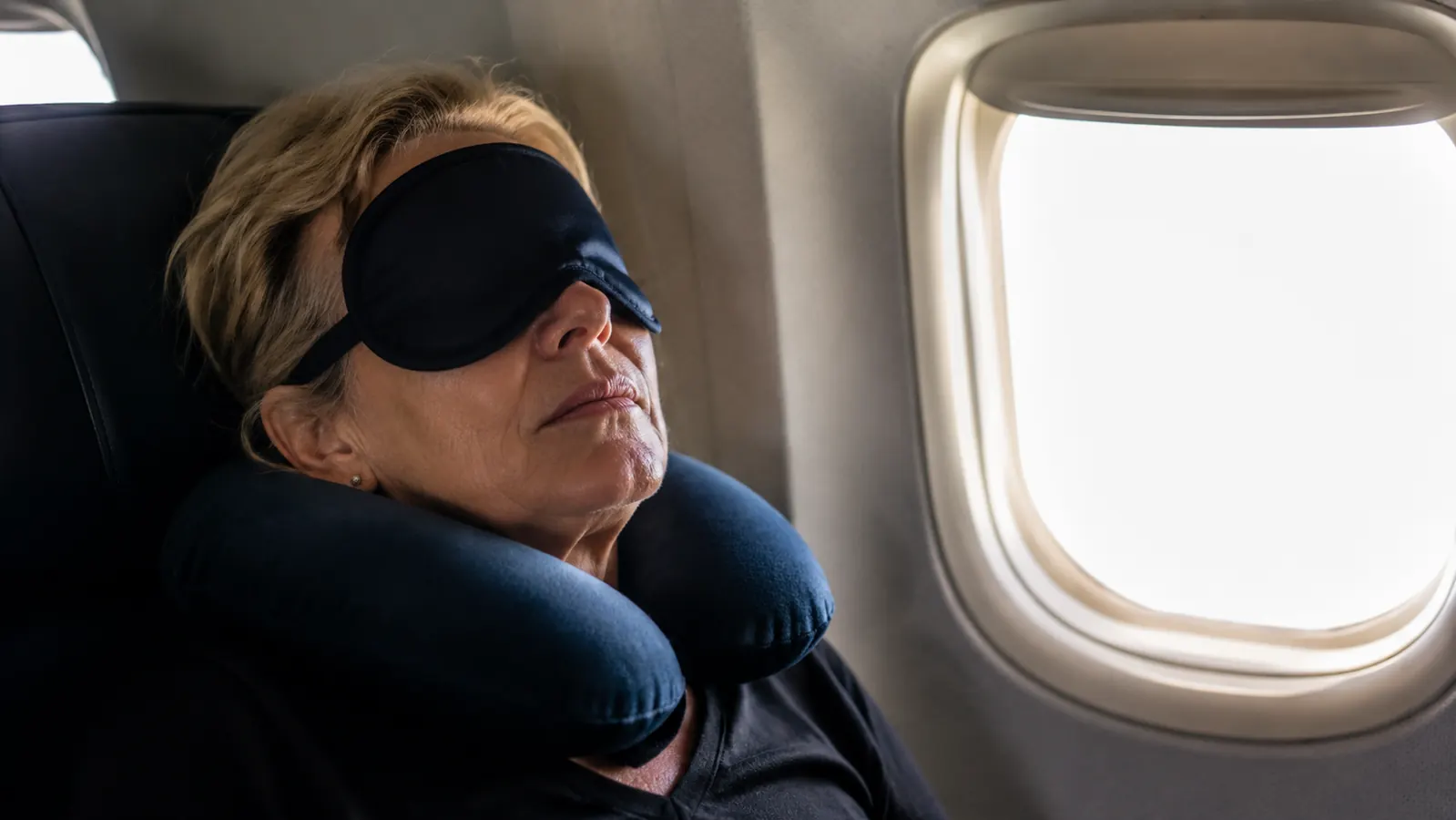
For airplane travel, the mask earns its keep on red-eye flights where the cabin lights are dim but never fully dark, and on transatlantic flights where you are trying to sleep through what is technically the middle of the day in your destination time zone. Pairing the mask with a neck pillow and earplugs on those flights turns a miserable six hours into actual rest. I land feeling like a person rather than a crumpled receipt.
What Else Helps Alongside the Mask
A blackout mask handles the light problem completely. But if you are still struggling to fall asleep even in total darkness, the issue may be a combination of light and noise, light and temperature, or light and late-evening screen exposure. The mask cannot fix those on its own.
For noise, a white noise machine set to a consistent low level masks the irregular sounds that pull you out of light sleep stages. A room that is too warm, especially one above 68 degrees Fahrenheit, makes it harder to maintain the drop in core body temperature your body needs to reach deep sleep. And screens within an hour of bed flood your eyes with short-wavelength blue light that suppresses melatonin, which is the same mechanism daylight uses to wake you up. If you eliminate light with the mask but watch your phone for 30 minutes before closing your eyes, you have already told your brain it is not bedtime. Put the phone down an hour before bed, get the room cool, and then put the mask on. That combination works better than any single intervention alone.
I also recommend keeping the mask on your nightstand rather than in a drawer. Out of sight means out of mind, and on the nights I forget to put it within reach before I get into bed, I am less likely to bother going to get it. The mask only works if you actually wear it.
Ready to sleep through summer mornings and hotel stays? The Mavogel mask is under $10 and adjusts to any face shape.
With over 94,000 Amazon reviews and a 4.5-star average, the Mavogel Cotton Sleep Mask is the most battle-tested blackout mask available. The flexible nose bridge creates a true seal, the cotton is breathable, and the strap does not pull your hair. It ships fast, and there is very little to lose at this price point.
Amazon Check Today's Price on Amazon →