
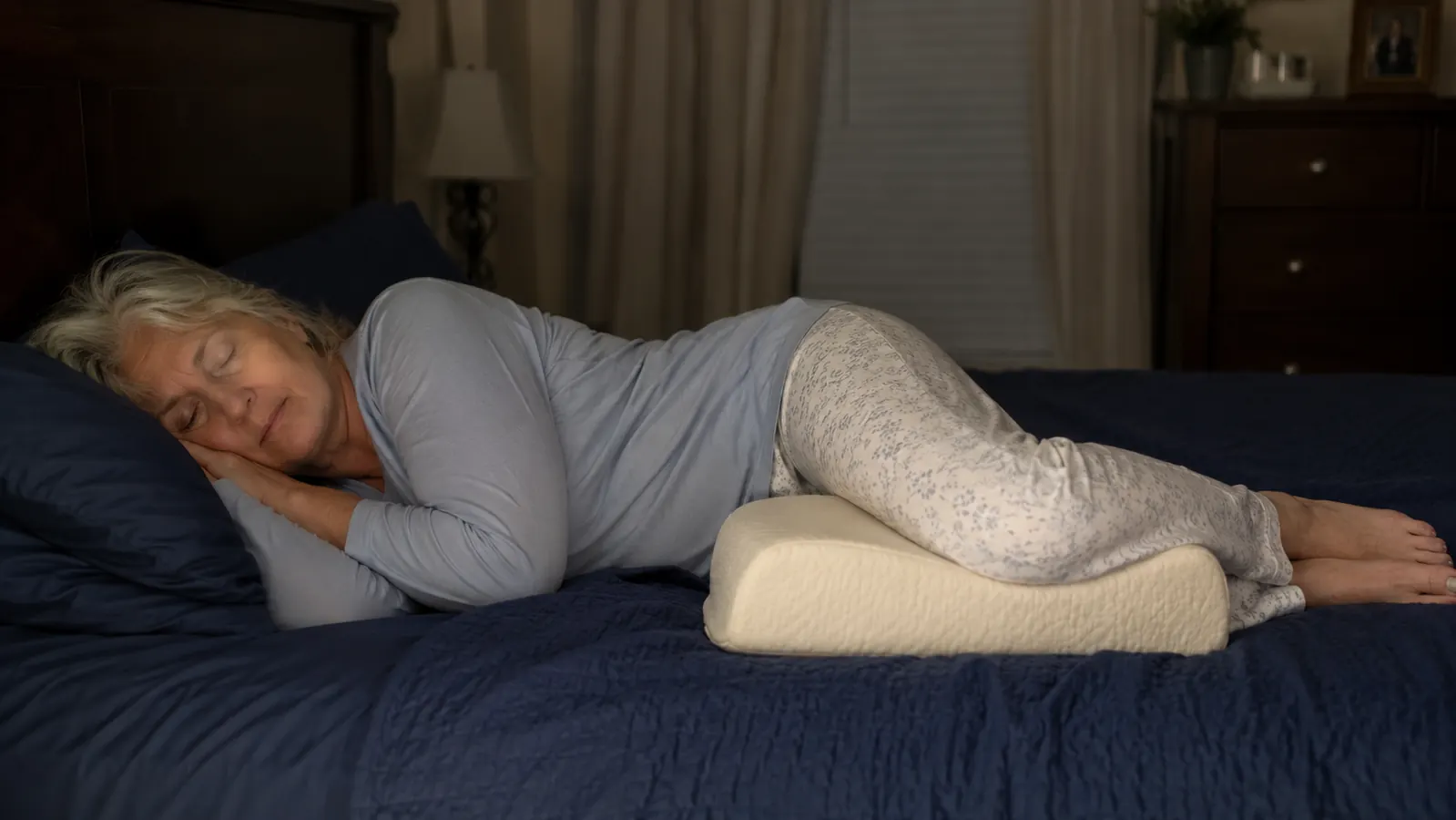
In the spring of last year, I was waking up at least three nights a week with a dull, grinding ache along my left hip. Not a sharp injury pain, more of an insistent pressure that would not let me get back to sleep. I am 58, I sleep on my side, and my doctor told me in 2023 that I have mild hip bursitis on that left side. She also told me that proper spine alignment at night would help. A friend suggested the Contour Legacy Leg and Knee Foam Support Pillow. I was skeptical. It looked like a fancy pool noodle bent into an hourglass. But after three months of sleeping with it every single night, I have a real answer to whether it works.
If you are a side sleeper in your 40s, 50s, or 60s dealing with hip pain or lower back stiffness every morning, this review is for you. I tracked my hip pain on a simple 1-to-10 scale each morning for the full 12 weeks. I washed the cover repeatedly. I traveled with it. I loaned it to my sister for a week. I have put it through more than most reviewers bother to, and what I found was more nuanced than the glowing five-star wave on the Amazon listing suggests.
The Quick Verdict
A genuinely effective knee pillow for side sleepers with hip or lower back pain, though the foam runs warm and the hourglass cutout takes about two weeks to feel natural.
Amazon Check Today's Price →If your hips wake you up before 4 a.m., this is the fix I tried first and still use every night.
The Contour Legacy is the most-reviewed contoured knee pillow on Amazon with over 42,000 ratings. Check today's price and availability before it goes out of stock again.
Amazon Check Today's Price on Amazon →How I Have Used It for Three Months
I started in March. My bed is a queen-size pillow-top with medium-firm support, and I sleep on my left side about 70 percent of the night, switching to my right when the left hip flares. My weight is 147 pounds and I am 5 feet 4 inches, which puts me squarely in the middle of the size range this pillow is designed for. Contour says it fits people between 5 feet and 5 feet 10 inches, so I was not testing edge-case fit.
The first three nights were awkward. The hourglass cutout is designed to lock your knees in so the pillow does not slide out, but my legs are not trained to stay in one position. I woke up the first night with the pillow pushed to the foot of the bed. By night five I had figured out the right positioning, knees slightly bent, pillow inserted so the wider end of the hourglass faces up. After that it mostly stayed put.
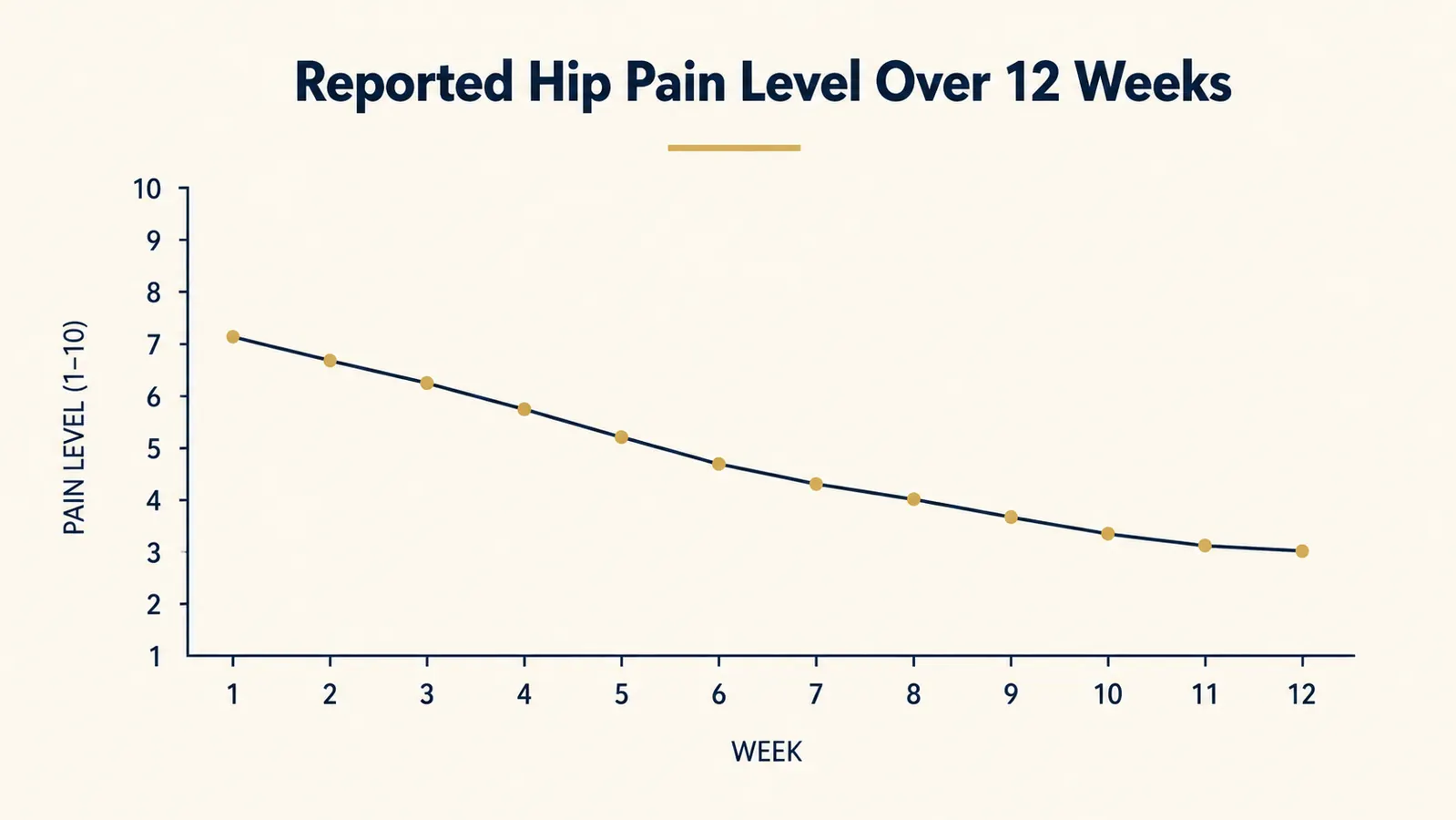
By week three, my morning hip pain had dropped from an average of 6.5 out of 10 to around 4.5. By week eight, I was sitting around 3. That is the honest number. Not zero. Not cured. But meaningfully better, enough that I stopped dreading getting out of bed on bad nights.
What the Foam Actually Does for Your Spine
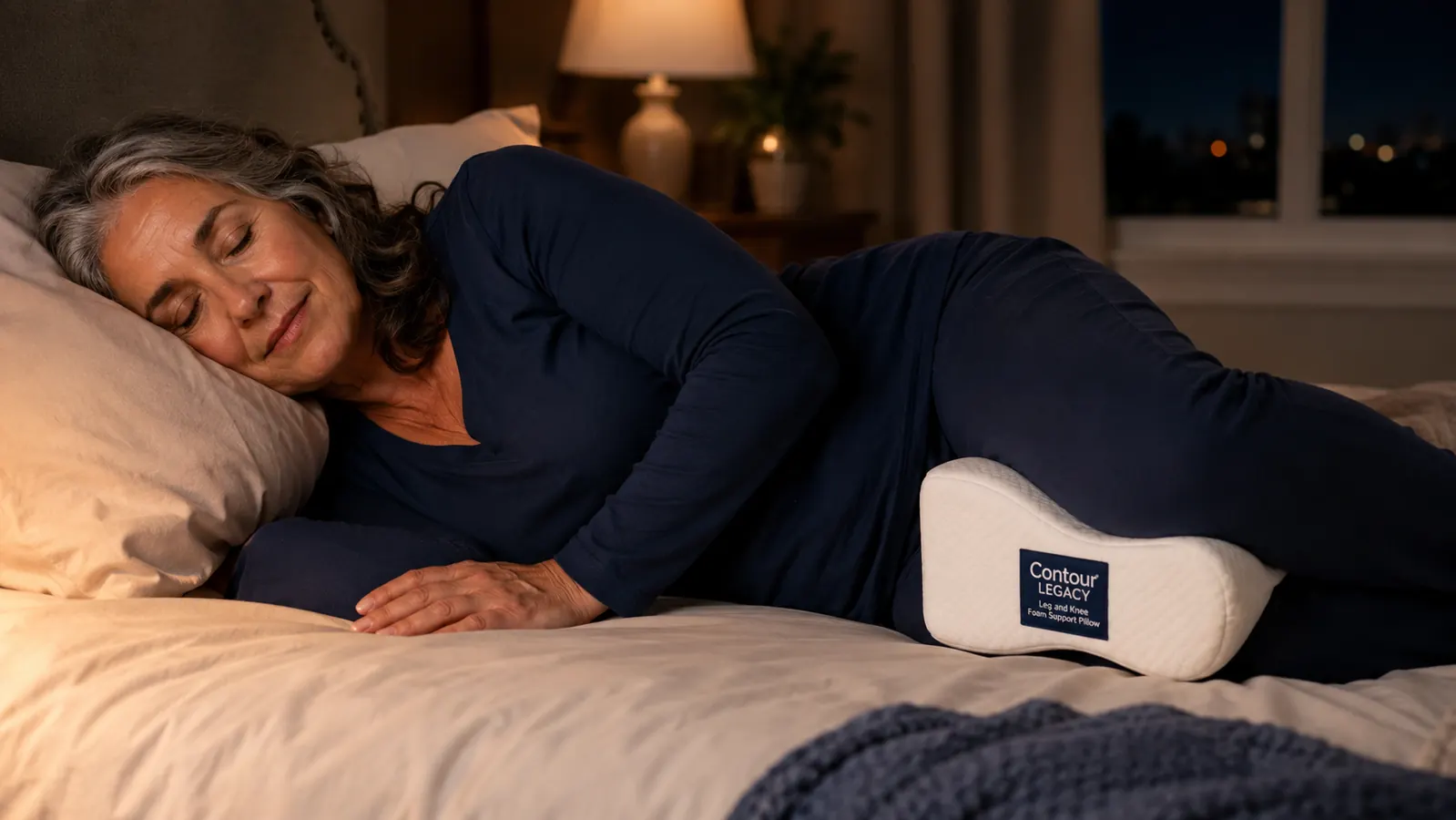
The science here is simple enough that I trust it. When you sleep on your side without anything between your knees, your top leg drops forward and rotates your pelvis. That rotation strains the hip joint and the muscles along the lower back. A firm wedge between your knees holds your top leg level with your hip, keeping the pelvis neutral. The Contour Legacy is made from memory foam, which is firmer than a standard pillow but soft enough not to create pressure points on the inside of your knees.
What makes the Contour Legacy different from a generic knee pillow is the hourglass shape. That cutout is not decorative. It catches your knees and prevents the pillow from sliding out during the night. After the adjustment period, I found it stays in place for four to six hours without me having to reposition it. That matters more than you might think. If your pillow slides out at 2 a.m. and you do not wake up to notice, you lose the benefit entirely.
The foam is medium-firm. It does not compress flat under the weight of your leg, which cheaper pillows do within a few weeks. After three months, mine has kept its shape. I compared it to a $12 foam wedge I bought at a drug store two years ago that went flat within six weeks. The Contour holds up.
What the Cover Gets Right and Where It Falls Short
The pillow comes with a zipper cover that is machine washable. I washed mine seven times over three months, on cold, delicate cycle, and line-dried it. The zipper has held and the fabric has not pilled. That alone puts it ahead of a lot of sleep accessories I have tested.
The cover is a polyester blend that feels soft initially. My one complaint is that it does not breathe especially well. If you run warm at night, or if you are in your 50s and dealing with night sweats, you will feel the foam trap heat against your inner knee. I live in central Florida and by July I was sleeping with a fan pointed at my legs specifically because of this. If you sleep in an air-conditioned bedroom that stays below 68 degrees, it is probably fine. If not, this is worth knowing before you buy.
I contacted Contour's customer service in May about whether a cooling cover was available separately. They told me a cooling cover version of this pillow exists but I would need to search it out on Amazon as a different listing. That is a bit of a runaround. I would prefer they just sell the covers separately.
By week eight my morning hip pain had dropped from a 6.5 to a 3 out of 10. Not zero, not cured, but enough that I stopped dreading getting out of bed.
How It Performs Over Time Compared to the First Week
The first week is the hardest. Your body is not used to having a fixed object between your knees and your sleep will feel lighter than usual as you unconsciously adjust position. Push through it. I tracked my average sleep quality on a simple 1-to-5 scale alongside my hip pain scores, and sleep quality dipped from 3.2 to 2.8 in week one before climbing back to 3.8 by week four. That rebound is real and it is sustained. Weeks eight through twelve were the best stretch of sleep I have had since my kids left the house.
The foam has not degraded noticeably. I do not see the compression that kills cheaper pillows. Contour does not publish a durability spec, but based on what I can feel after 90-plus nights, I would expect this to hold its shape for at least 18 months of nightly use. Whether it holds up past that, I cannot say yet.

How It Compares to Alternatives I Considered
Before settling on the Contour Legacy, I looked at three alternatives. A folded body pillow (too large, too hot, slid everywhere). A flat foam wedge (no hourglass, slid out every night within a week). And a knee wedge pillow with a different tapered shape that is designed for slightly different back-sleeper support. If you want a head-to-head breakdown, I wrote a full comparison at the link below.
The short version: the Contour Legacy beats a flat wedge because the hourglass actually keeps the pillow in position. It beats a folded body pillow because it is washable, cooler, and sized for the job. The main reason to choose something else is if you run very hot or if you are significantly taller than 5 feet 10 inches, in which case the sizing may not work as well. For anyone in the typical height range dealing with hip or lower back pain from side sleeping, the Contour is the most practical choice in its price range.
For a detailed side-by-side, see my article on the Contour Legacy vs knee wedge pillow for hip pain. And if you are just starting to research this category, the piece I wrote on 10 reasons a knee support pillow helps side sleepers gives you the full picture of why the positioning matters so much. You can also follow a step-by-step setup routine in my guide on how to relieve hip pain at night using a knee pillow.
What I Liked
- Hourglass cutout actually holds the pillow in place through the night once you get used to it
- Medium-firm foam holds its shape after 90-plus nights, no noticeable compression
- Zipper cover is machine washable and has held up through seven washes
- Measurable reduction in morning hip and lower back pain within two to three weeks
- Good value for a specialty orthopedic sleep accessory with 42,000-plus verified reviews
Where It Falls Short
- Cover traps heat, noticeable issue for hot sleepers and those dealing with night sweats
- Takes one to two weeks before the positioning feels natural rather than awkward
- Does not fit larger frames well above about 5 feet 10 inches based on my testing with my taller sister
- Cooling cover requires finding a separate Amazon listing rather than being offered alongside this one
- Will not eliminate pain from a serious orthopedic condition, only support better alignment
Who This Is For
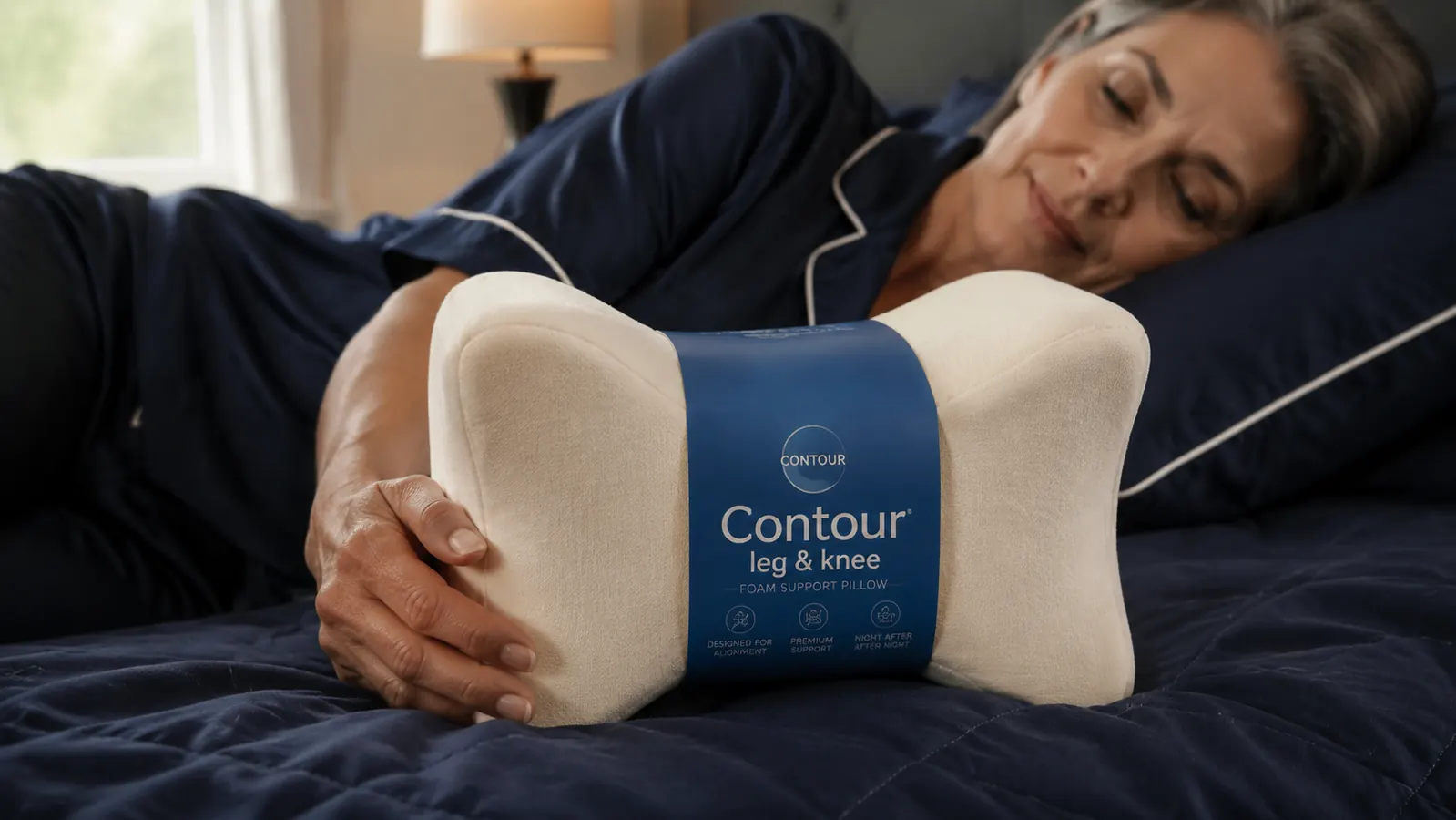
This pillow is built for side sleepers between roughly 5 feet and 5 feet 10 inches who wake up with aching hips, stiff lower backs, or general discomfort from their top leg pulling their pelvis out of alignment overnight. It works especially well if you have been told by a doctor or physical therapist that hip alignment during sleep is a factor in your pain. It is also a smart choice if you are tired of body pillows that end up on the floor by morning. The hourglass design is genuinely the most practical solution I have found for keeping the support where it belongs.
Who Should Skip It
Skip it if you run hot at night and sleep without air conditioning in a warm climate. The foam and cover combination will add noticeable heat to your inner knees and that is a real comfort issue in summer. Also skip it if you are taller than about 5 feet 10 inches or have a heavier frame, because the hourglass sizing may not cradle your knees properly and you may get better results from a longer cylindrical pillow or a full body pillow. If your hip pain is severe or stems from a diagnosed structural issue, see a physical therapist before relying on a pillow alone, this helps a lot but it is not a substitute for proper care.
Three months in, it is still the first thing I put on the bed at night. Here is where to find it.
The Contour Legacy Leg and Knee Foam Support Pillow is one of the most reviewed specialty sleep pillows on Amazon. Over 42,000 customers have rated it. Check today's price and see if it is in stock in your size.
Amazon Check Today's Price on Amazon →