

For about three years I was the person who lay in bed staring at the ceiling until midnight, even when I was exhausted. I tried melatonin, which helped me get drowsy but left me groggy the next morning. I tried herbal teas, I tried cutting coffee after noon, I tried all of it. What finally made a measurable difference was magnesium glycinate, and specifically Pure Encapsulations Magnesium Glycinate, which my doctor mentioned almost as an afterthought at a routine checkup. The problem was, I took it wrong for the first two weeks and then almost gave up. Turns out there is a right way and a wrong way to use this supplement for sleep, and most of the advice online skips the specifics that actually matter.
This guide walks through what I figured out over about eight weeks of deliberate testing. I tracked the time I fell asleep, how many times I woke up, and how I felt getting out of bed at 6:30 in the morning. By week four, the difference was real enough that I started recommending this approach to my sister and two friends who have the same problem. I am not a doctor, and nothing here is medical advice. But I can tell you exactly how I use it, when, and what to watch for when you are getting started.
Still lying awake at midnight? This is the magnesium form that actually absorbs.
Pure Encapsulations Magnesium Glycinate is the supplement I use every night. It comes in a highly absorbable glycinate form, no fillers, and has over 48,000 reviews on Amazon. Check today's price before you try a cheaper form that may not work the same way.
Amazon Check Today's Price on Amazon →Why Magnesium Glycinate Specifically?
Before getting into the steps, a quick word on why the form of magnesium matters. Magnesium oxide is the cheapest and most common form you find at drugstores. It has poor absorption and is mainly useful as a laxative. Magnesium citrate absorbs better but can still cause digestive upset at the doses needed for sleep support. Magnesium glycinate is bound to glycine, an amino acid that has its own calming properties, and it absorbs well without the stomach issues. It is also the form most often used in the studies that look at magnesium and sleep quality. Pure Encapsulations uses no artificial additives, which matters if you are sensitive to fillers, and the glycinate chelate they use is a clean, well-absorbed form.
I mention all of this because I started with a store-brand magnesium oxide and noticed nothing. Then I tried magnesium citrate and had loose stools. The glycinate form was the first version that worked without side effects. If you have tried magnesium before and written it off, it may simply be that you used the wrong form.
Step 1: Start with a Lower Dose Than You Think You Need
The label on Pure Encapsulations Magnesium Glycinate lists 120 mg of magnesium per capsule and suggests taking two capsules, which gives you 240 mg of elemental magnesium. That is a reasonable maintenance dose for most adults. When I started, though, I followed advice I found in a health forum and jumped straight to 400 mg on night one. I slept fine, but the next morning I had mild stomach cramps. Nothing serious, but enough to put me off for a few days.
The smarter approach, which I confirmed by asking my doctor, is to start at one capsule (120 mg) for the first week. Your gut needs time to adjust, and going slowly lets you gauge how your body responds before increasing. Most people find that 200 to 300 mg is plenty for sleep. Only a small percentage need the full 400 mg. Starting low also helps you identify the minimum effective dose, which is useful information once you are buying a bottle that costs around $46.
After one week at 120 mg, I moved to two capsules (240 mg) and stayed there. That is where I noticed the clearest improvement in how quickly I drifted off. I never needed to go higher.
Step 2: Take It at the Right Time
Timing is where most people go wrong. Magnesium glycinate is not melatonin. It does not make you feel immediately sleepy within 20 minutes of taking it. What it does is help your nervous system down-regulate over the course of an hour or two, which makes falling asleep easier when you do go to bed. If you take it right before you get under the covers expecting a fast knockout effect, you will be disappointed.
I take my two capsules with a small glass of water at 8:30 p.m. I aim to be in bed by 10:00. That 90-minute window seems to be about right. I notice that by the time I am actually lying down, my mind is quieter than usual. Not sedated, just less prone to spinning on the next day's to-do list. Some people do better at 60 minutes before bed; some prefer 2 hours. The general range that works for most people is 1 to 2 hours before your target sleep time. Take it too early in the evening and the window may have passed by bedtime.

Step 3: Take It Consistently, Not Just When You Feel Anxious
This is the mistake I made in the first two weeks that almost caused me to give up. I took magnesium glycinate on nights when I was already wound up and skipped it on nights when I thought I would be fine. The result was inconsistent, and I convinced myself the supplement was not working.
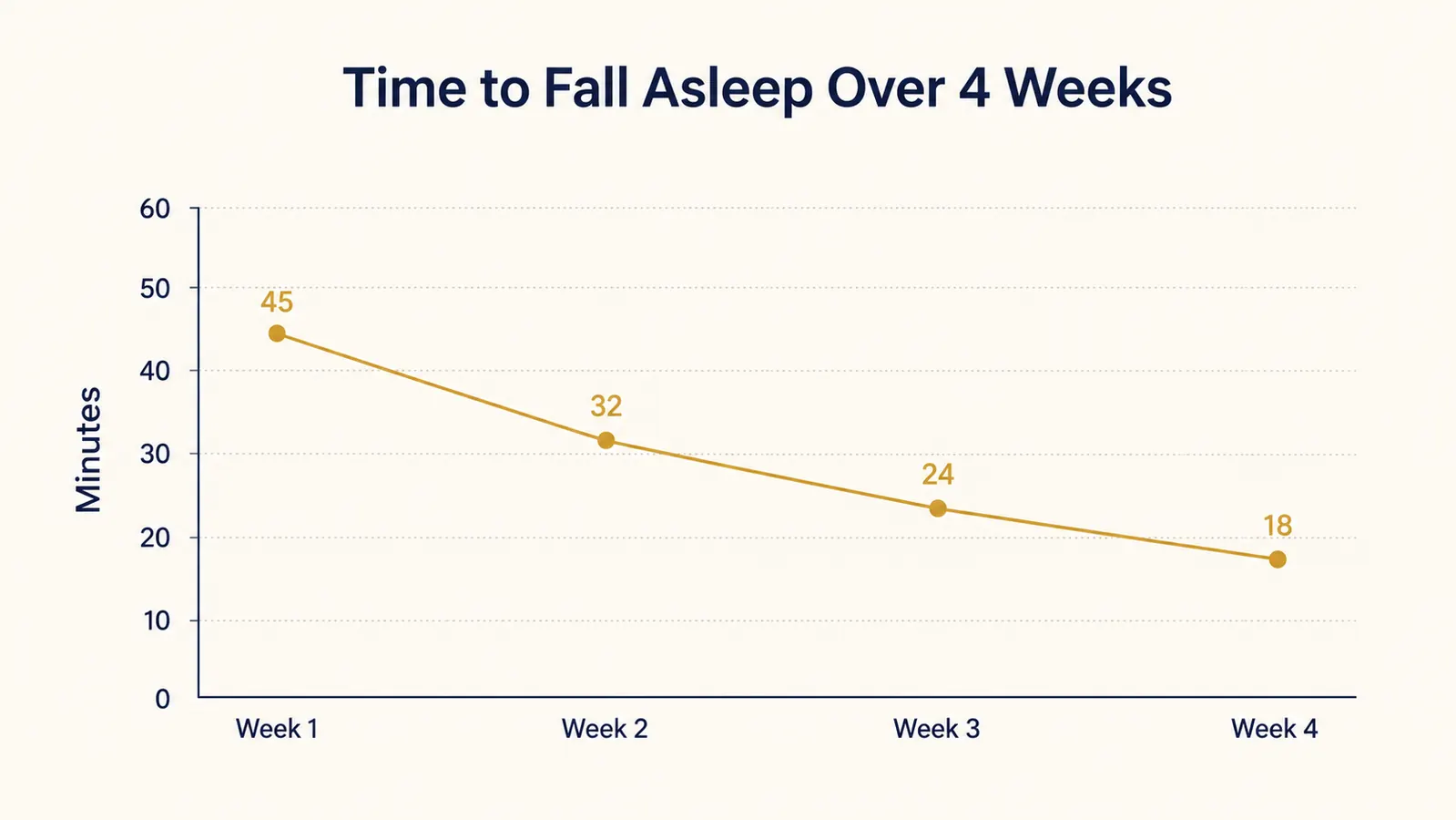
Magnesium is not a fast-acting sedative. Most people who see the best results take it every night, not on demand. The reason is that magnesium is a mineral your body uses continuously, and many adults are low in it without knowing it. Consistent daily intake helps replenish those levels over time, which is what gradually produces the improved sleep you are looking for. The improvements I tracked showed almost nothing in week one, a mild change in week two, and then a noticeable difference by weeks three and four. That pattern is typical.
Think of it less like taking a sleeping pill and more like taking a daily vitamin. The benefit is cumulative. If you take it only occasionally, you will never get to the level where the full effect shows up.
Step 4: Take It With a Small Snack, Not on an Empty Stomach
This one surprised me. I had been taking my capsules on an empty stomach around 8:30 p.m., about three hours after dinner. Within a week, I started noticing mild nausea about 40 minutes after taking them. Not every night, but often enough to be annoying.
The fix was simple: I started eating a small snack at the same time, something like a few crackers and peanut butter or a small handful of almonds. The nausea stopped completely. Taking supplements with even a small amount of food slows absorption slightly, which actually smooths out the response and reduces GI irritation. You do not need a full meal, just enough food to give your stomach something to work with. If you have been taking magnesium on an empty stomach and feeling off, try adding a light snack and see if that changes things.
Step 5: Track What Changes, Even Loosely
I kept a very simple log on my phone for the first four weeks: the time I got into bed, a rough estimate of how long it took to fall asleep, how many times I woke up, and how I felt at 6:30 a.m. on a one-to-five scale. That is it. Nothing elaborate.
The reason tracking matters is that sleep improvements are gradual and easy to miss if you are just going by feeling. There were individual bad nights in weeks two and three that made me doubt the supplement was helping at all. But when I looked at my log, the average time to fall asleep had dropped from about 42 minutes in week one to 24 minutes in week three. The bad nights were outliers. Without the log, I probably would have given up during one of those rough patches.
You do not need an app or a sleep tracker. A notes app on your phone or a piece of paper on your nightstand does the job. Four data points per night, 30 seconds to write down. Do it for four weeks before you decide whether the supplement is working.
By week four, my average time to fall asleep had dropped from 42 minutes to about 18. The bad nights were still there, but they were exceptions instead of the rule.
What Else Helps
Magnesium glycinate works best when the rest of your sleep setup is not working against it. I found the biggest supporting changes were keeping my bedroom cooler (around 67 degrees), cutting screens for 30 minutes before the capsules started to take effect, and having a consistent bedtime, meaning I go to bed within about 15 minutes of the same time every night. None of those are new advice, I know. But magnesium seems to amplify them rather than replace them. On nights when I stayed on my phone until 10:45 and then went straight to bed, even the supplement could not undo the damage. Think of magnesium glycinate as raising your floor, not as a ceiling you can fall from whenever you want.
Some readers also combine magnesium glycinate with a sleep mask or a white noise machine and report better results than with any single tool alone. I use a white noise machine on nights when street noise is bad, and the combination does seem to work better than either one by itself. If you are dealing with multiple sleep disruptions, treating them together rather than one at a time tends to get you to real sleep faster. You can read more about that approach in our other guides on this site.
One thing to avoid: combining magnesium glycinate with high doses of melatonin. My doctor mentioned that layering both at once can leave some people feeling foggy in the morning, since both affect sleep pathways in different ways. If you want to use melatonin occasionally for jet lag or a disrupted schedule, that is fine, but I would not make both a nightly habit at the same time. Let magnesium be your daily baseline and use melatonin sparingly if at all.

What to Expect in the First Month
Week one is mostly about getting your body used to it. Most people notice little to nothing during this period, and that is normal. Week two is when some people start feeling slightly calmer at bedtime, but sleep time itself may not change much yet. Week three is usually when the clearest changes appear: falling asleep faster, waking less often in the middle of the night, or waking up feeling more rested even if total sleep time is similar. By week four, you should have enough data to evaluate whether it is working for you.
If you reach four weeks with no change at all, there are a few things to check. First, confirm you are using the glycinate form, not oxide or citrate. Second, confirm you are taking it consistently every night, not on an as-needed basis. Third, check the dose: if you have been at 120 mg, try moving to 240 mg for another two weeks. And fourth, look honestly at the other variables. If you are drinking alcohol most nights, working irregular shifts, or sleeping in a room with significant light or noise pollution, those factors will override most supplements.
For the majority of people who try magnesium glycinate correctly, the experience is not dramatic. It does not knock you out. What it does is make the whole process of winding down feel a little less like a battle. That quieter transition into sleep is something you appreciate more and more over time, especially if you have spent years lying there fighting your own brain.
Ready to try the approach that worked for me? Here is the exact product.
Pure Encapsulations Magnesium Glycinate has a 4.7-star rating from more than 48,000 Amazon buyers. It is the glycinate chelate form, no unnecessary fillers, and it is the only magnesium supplement I have kept in my nightstand drawer long term. Check today's price on Amazon and see if there is a size that fits your budget.
Amazon Check Today's Price on Amazon →